Memory Pick
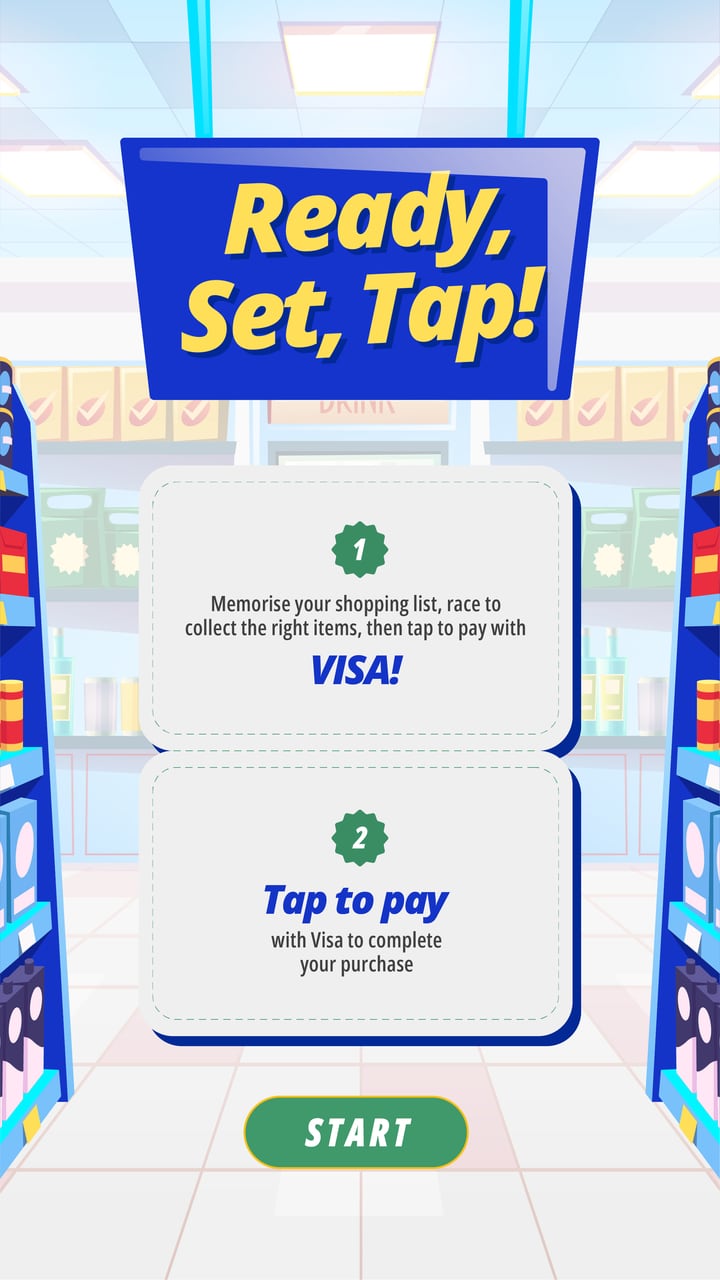
A memory and speed game. Players memorise a list, then race to pick the right items, in the right quantities, from a shelf of lookalikes before time runs out. Shown here in its Shopping Rush theme, with a shopping list and a store shelf. Useful for product discovery, range awareness and fast, competitive campaigns.
How the Memory Pick Works
Start and Memorise the List
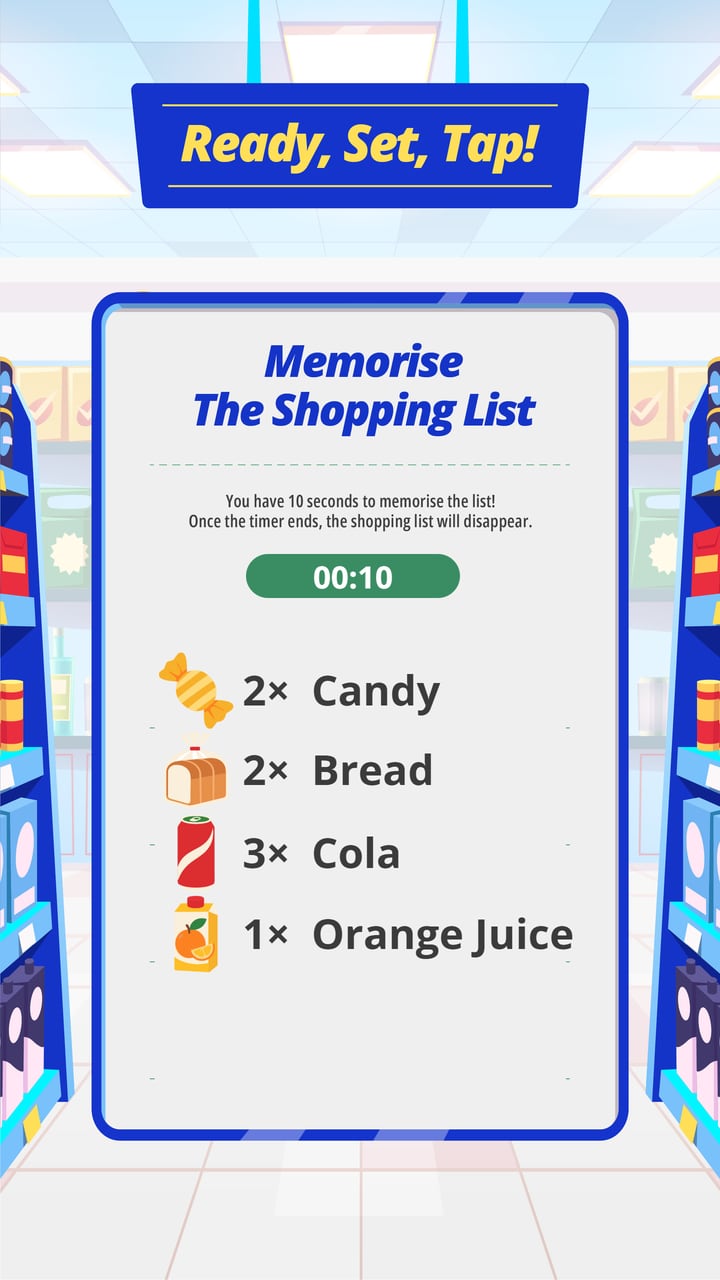
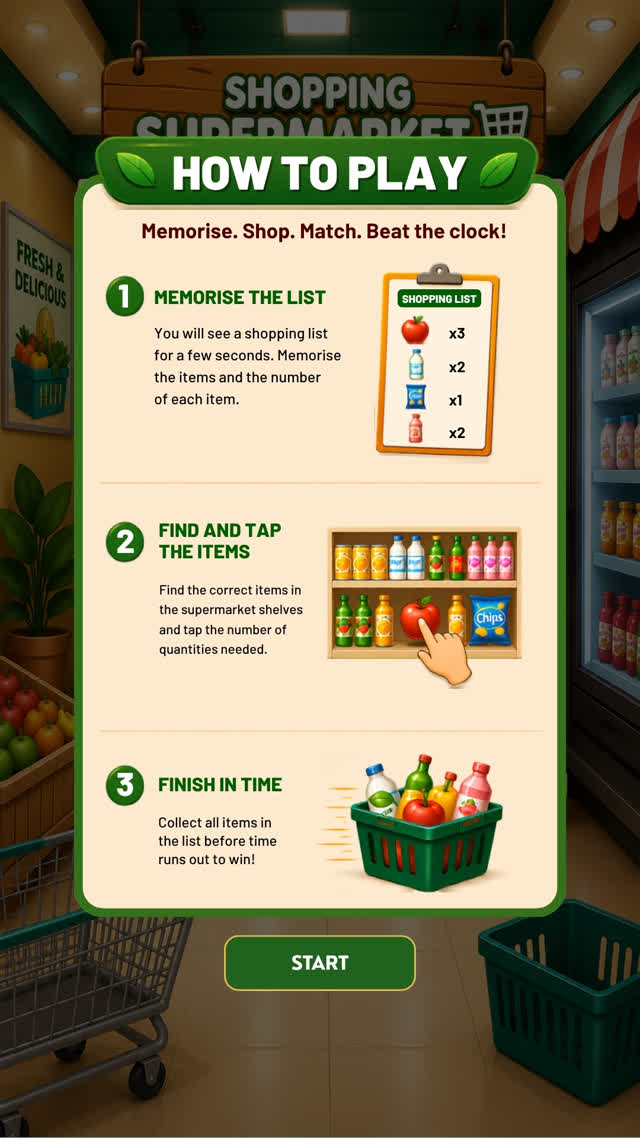
The game starts by itself and a shopping list appears for a short time. Users memorise the items and quantities before the list disappears.
Pick the Items in Time
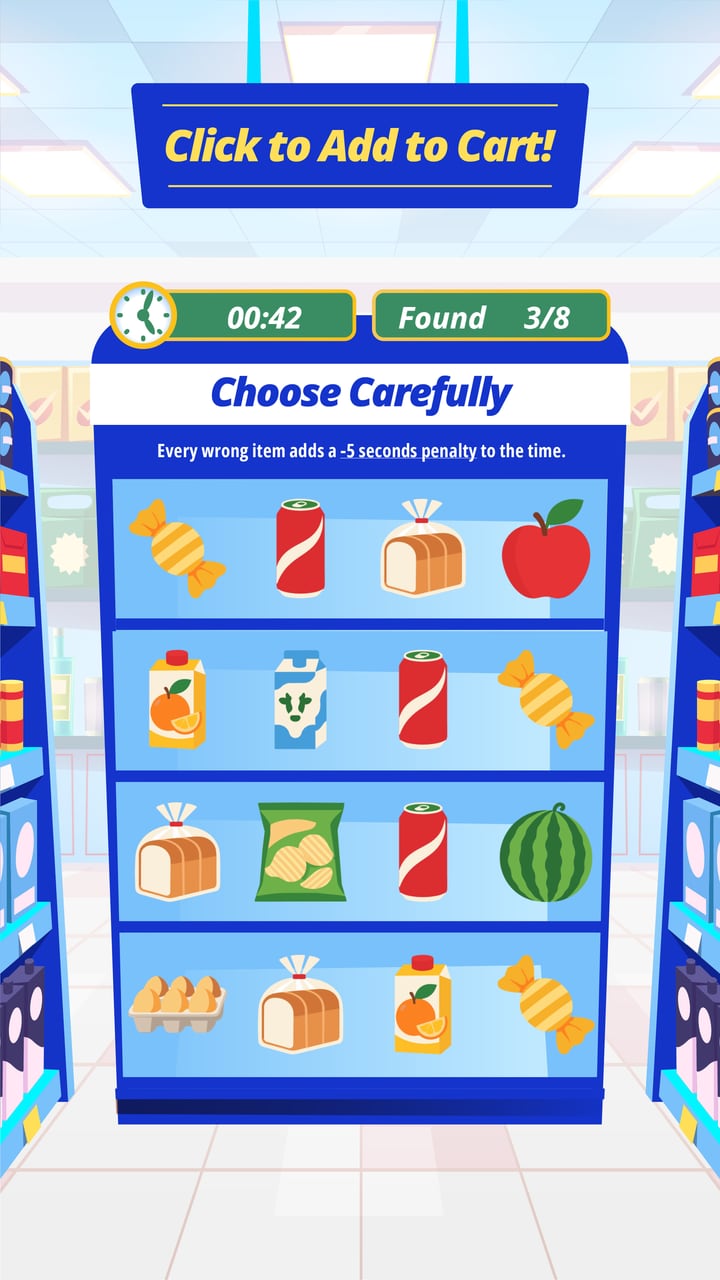
Users tap the correct items on the shelves within the time limit. A wrong item, or one already picked in full, takes the penalty time you set off the clock.
Receive the Result
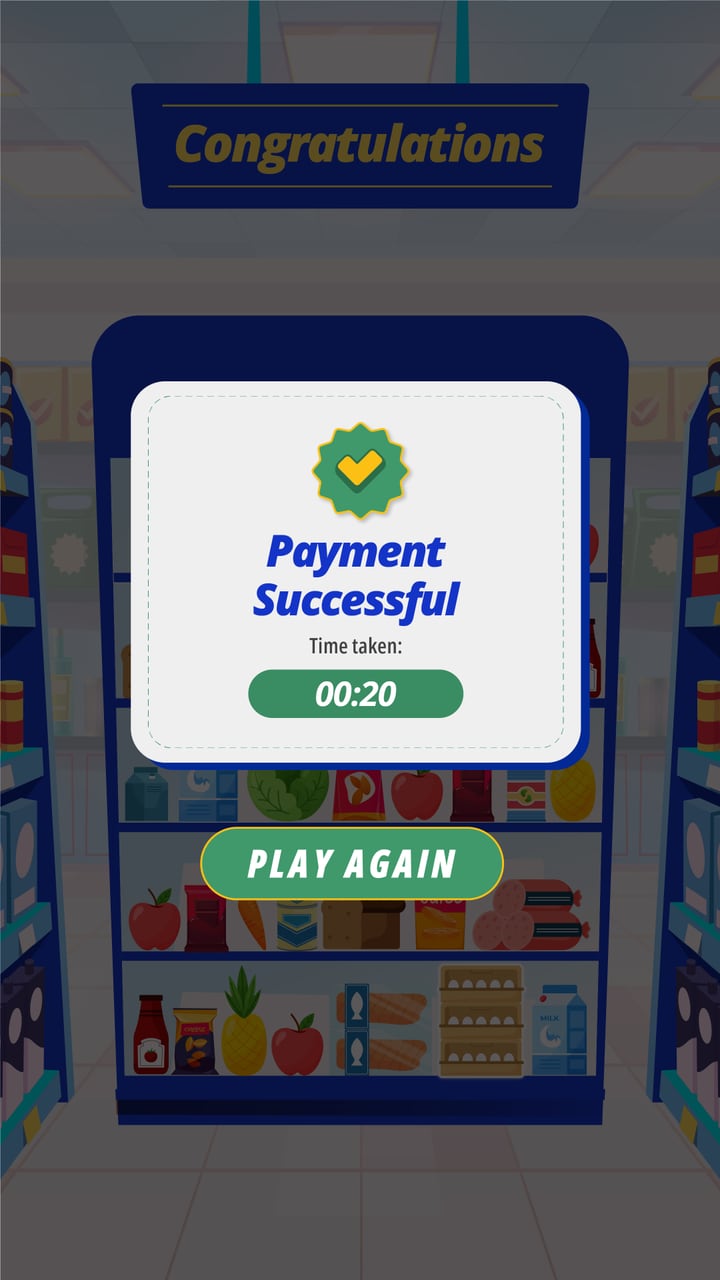
The round ends when every item on the list is picked or the time runs out. The score is the time taken, so the fastest players rank highest.
Continue the Journey
Users can join a leaderboard, submit their details or play again, depending on the campaign setup.
Campaign in Action
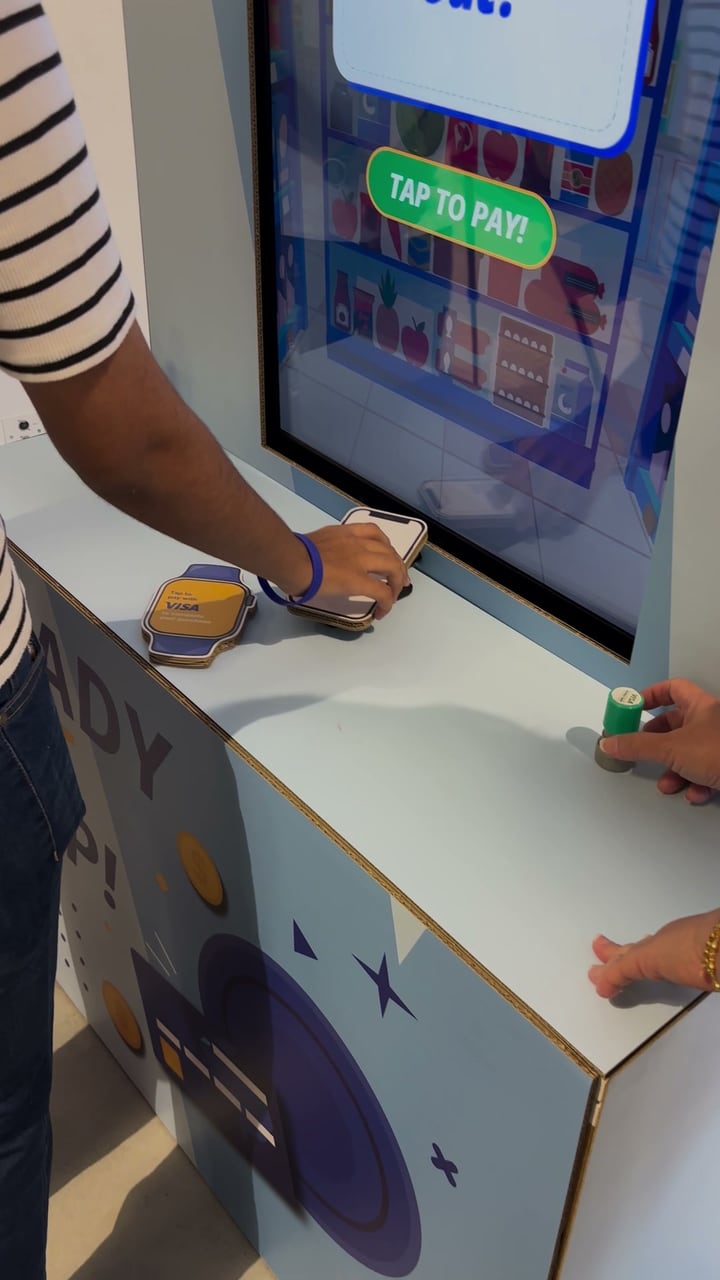
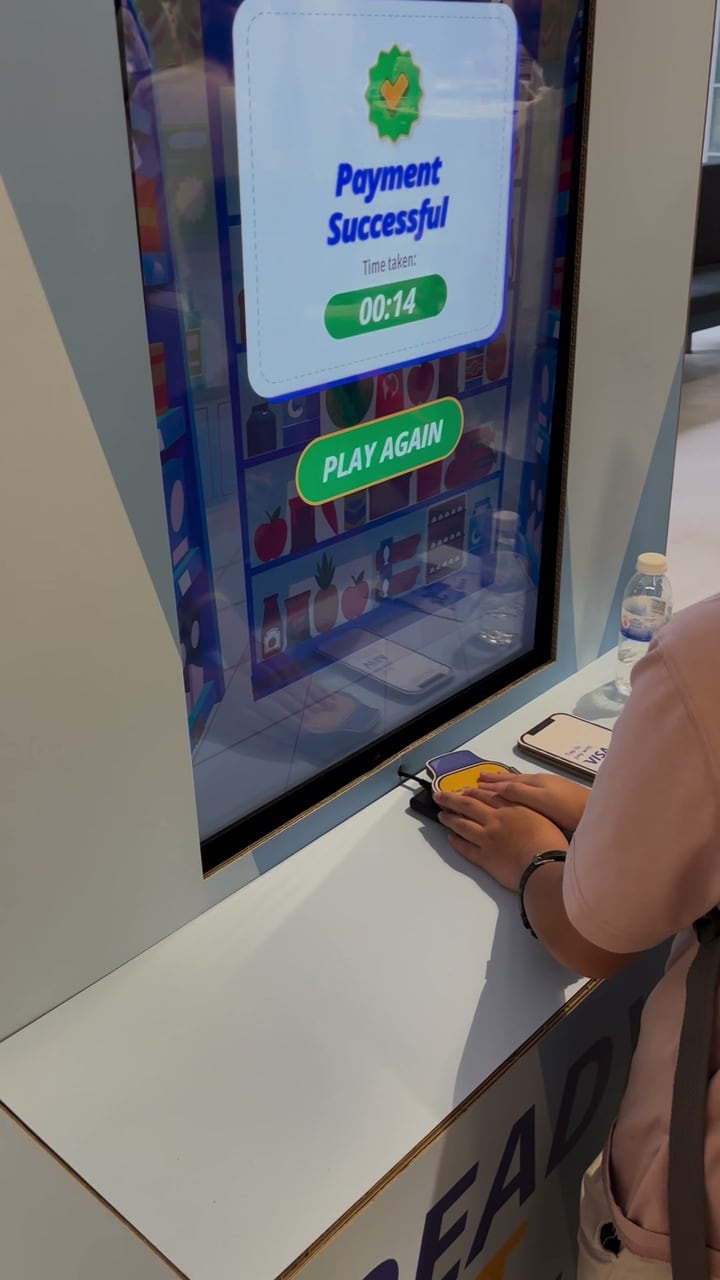
The Great Shopping Rush at Visa Family Day, where children memorised a shopping list, picked the items against the clock and paid with a tap.
Add Interactive Props to Your Build
Pair the Shopping Rush theme with an NFC card reader and a physical prop, so players finish their shop with a tap to pay, just like at a real counter.
Hands-On Play
Players pick up a real prop, like a branded card, instead of only tapping the screen.
More Engaging
The tap on the reader is the big finish, keeping players involved to the end.
Feels Like Paying
Players tap to pay like real shoppers, showing how contactless payment works.
The Shopping Rush Theme
Shopping Rush is the ready-made shopping theme for Memory Pick. Players memorise a shopping list, then tap those products on a shelf full of lookalikes, and each one flies into the cart. Swap in your own product pictures, names and brand art to show off your real range.
 9:16
9:16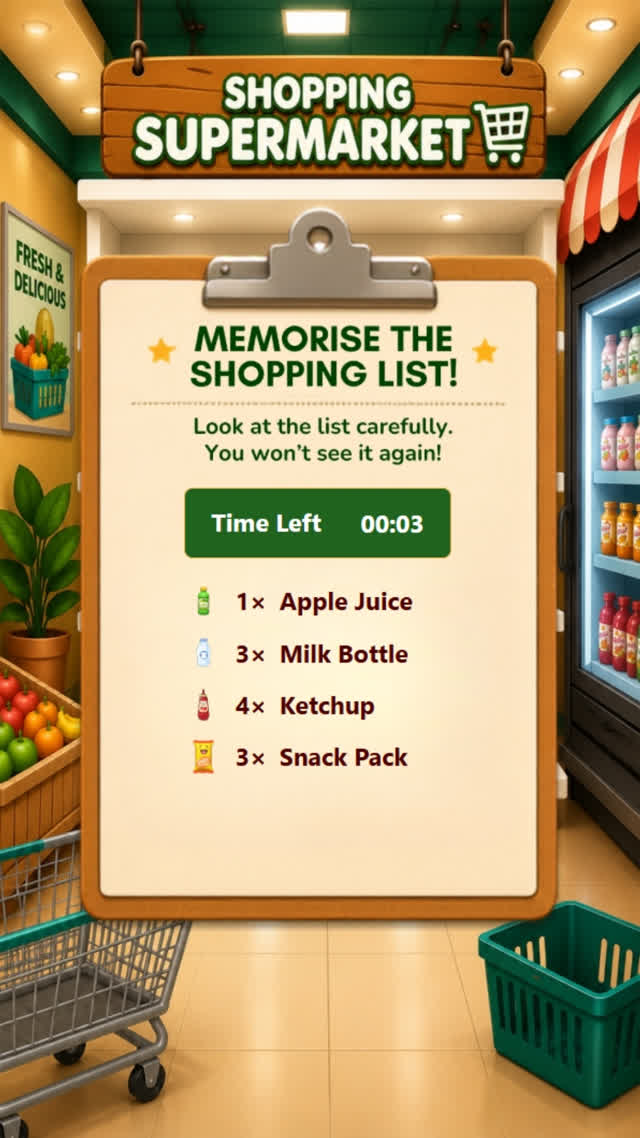 9:16
9:16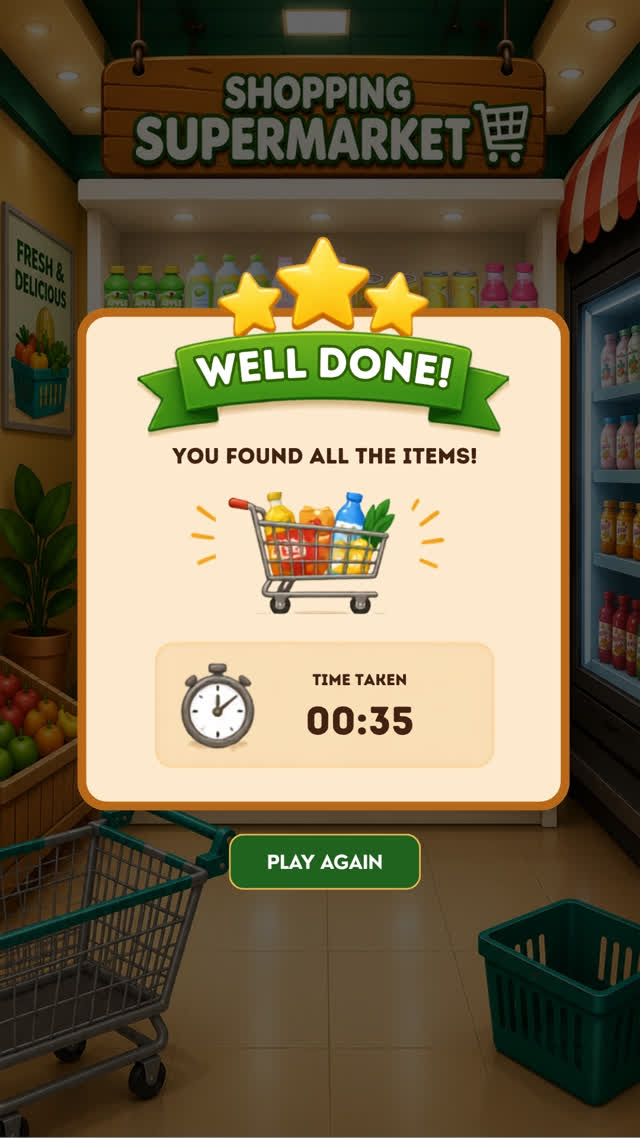 9:16
9:16What You Can Customise
What the Memory Pick Can Do for Your Campaign
Attract and Engage Users
The memory and speed challenge is quick to grasp and keeps users focused as they race to find the right items.
Reinforce Campaign Messaging
Fill the shelves and shopping list with your own products, packaging and campaign items so users engage with the range.
Capture Participation Data
Track engagement, completion, scores and conversion. Contact details or responses to customised questions can also be collected where required.
Extend the Engagement
Connect the game to a leaderboard, reward, voucher, lucky draw or the next step in the campaign journey.
Where Brands Use It
Events
Create a quick and engaging activity that encourages attendees to stop and participate.
Exhibitions
Attract visitors to the booth with a simple and repeatable branded challenge.
Shopping Malls
Run interactive games for shopper engagement, seasonal campaigns and promotions.
Retail Stores
Support product promotions, purchases and in-store reward journeys.
Product Launches
Turn product features, visuals or campaign messages into an interactive game.
Roadshows and Pop-Ups
Launch the same branded experience across different campaign locations.
Ways to Set It Up
Online Experience
Users can access the game through a web browser on their own device.
On-Site Experience
The game can be set up as a physical experience at events, retail spaces, exhibitions or activations.
Frequently Asked Questions
A marketing game is a branded interactive experience that encourages users to complete a simple challenge, receive a score or result and continue through a campaign journey. It can be used to attract attention, reinforce campaign messaging and encourage participation.
Shopping Rush is the shopping theme of Memory Pick. It is the same memory and speed game, dressed as a shopping trip. Use it as it is, or swap in your own products and brand art.
Yes. The background, images, game objects, colours, typography, buttons, sound effects and result screens can be customised to match the campaign or brand identity.
Yes. Users can access the game online through a browser on a mobile phone, tablet or laptop. It can also be set up on-site using a touchscreen display with an operating system, browser and internet connection.
Yes. Scores can be added to a leaderboard to rank users throughout the campaign. The leaderboard can be displayed immediately after the game or shown on a separate screen.
Not inside this game. Memory Pick has no prize setting, so the leaderboard ranks the fastest players instead.
qiksense can track campaign performance such as participation, completion rates, scores and conversion. Contact details and responses to customised questions can also be collected with the relevant consent copy, and the data can be exported.
Build and Launch Your Marketing Game
Customise the gameplay, design the screens and launch your marketing game online or on-site with qiksense.